

Symptoms of hearing system disorders
Investigation and research show that the presence of one of the following 7 symptoms in the patient’s history can be a sign of the existence of a hearing loss, unless the diagnostic tests reject the existence of a hearing loss. These seven signs are:
1) Pain and feeling of fullness in the ear
2) Discharge from the ear
3) Reversible hearing loss
4) Tinnitus
5) Dizziness
6) Familial hearing loss
7) Delay in the development of language and speech
Pain and fullness in the ear
Pain in the ear can be a sign of a lesion in the hearing system. In acute otitis externa, early stages of otitis media, and rapid changes in air pressure (barotrauma), pain is a common symptom, and in the latter two cases, it can be accompanied by a feeling of fullness in the ear. Of course, we should not forget that sometimes toothache and temporal joint pain can be confused with earache.

Discharge from the ear
Some of the ear inflammatory lesions are accompanied by discharge. In acute otitis externa and in acute and chronic otitis media, discharge from the ear is a common symptom, although the color of the discharge can be different in each lesion.

Hearing Loss
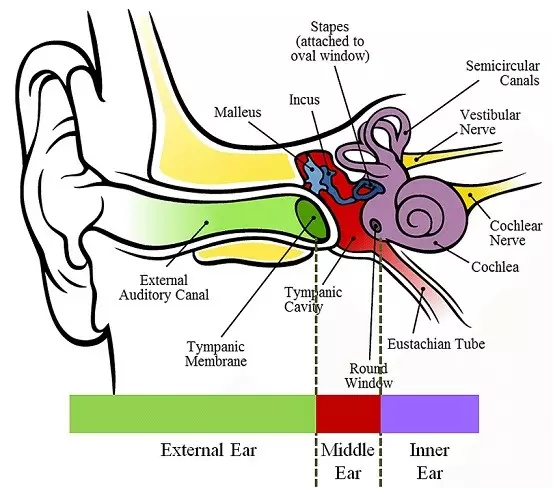
Hearing loss can be classified into four different categories based on the area of the auditory system that is damaged:
- conductive hearing loss
- Sensorineural hearing loss
- mixed hearing loss
- central hearing loss
Conductive Hearing Loss
When hearing loss (or deafness) is caused by problems and damage to the ear canal, eardrum, middle ear and middle ear ossicles (hammer, anvil and stirrup), the hearing loss is of a transitional type. Among the causes of transient hearing loss, the following can be mentioned:
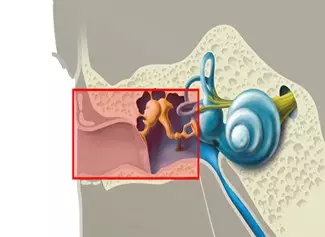
- Abnormalities in the structure of the external ear, ear canal and middle ear
- Mass accumulation (ear wax) or foreign objects inside the ear canal
- Ear canal infection
- Accumulation of fluid in the middle ear caused by inflammation or infection of the upper respiratory tract
- Middle ear infection that can lead to the accumulation of fluid in the middle ear and disrupt the movement of the eardrum and middle ear bones. This condition is also called otitis media.
- Allergies make the middle ear small and cause disturbances in its movement and vibration.
In some cases of conductive hearing loss, removing or eliminating the blocking factor (such as foreign body and cerumen) leads to improvement of hearing thresholds. It should be remembered that hearing loss can be variable in the case of cerumen accumulated in the canal, which occurs due to the contact of cerumen with water or water evaporation and reduction of cerumen volume. For cases of otitis externa and otitis media, the use of medicine leads to improvement of hearing thresholds, but inappropriate drug treatment may cause the infection to return.
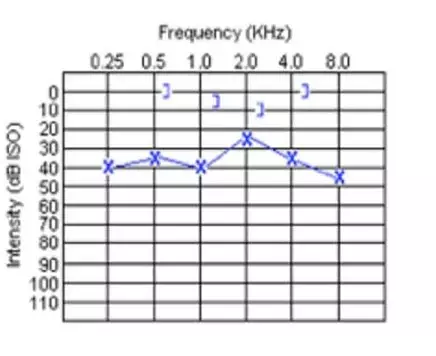
An example of a conductive hearing loss
Sensorineural hearing loss
When hearing loss (or deafness) occurs due to inner ear problems (nerve damage), it is sensorineural hearing loss, which is the most common type of hearing loss. The following are the most important causes of sensorineural hearing loss:
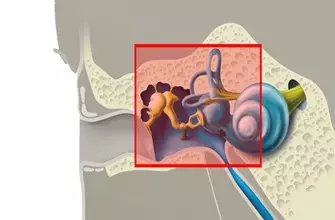
- Meniere’s Disease
- Presbycusis
- Nerve damage caused by syphilis
- Idiopathic Hearing Loss
- Nerve tumors such as the tumor of the eighth nerve
- Drug poisoning by taking drugs such as aspirin, aminoglycosides and drugs used in chemotherapy.
- Head injuries
- Long-term exposure to very loud sounds (Noise Induced Hearing Loss – NIHL). Loud sounds above 75 decibels cause damage to the inner ear.
In cases of hearing loss with an unknown cause, which can probably be due to viral inflammation or related to the interruption of blood supply to the cochlea following the blockage of a part of the branches of the cochlear artery, there are reports of the return and recovery of hearing thresholds to normal levels. But there is a possibility of reoccurrence of these lesions.
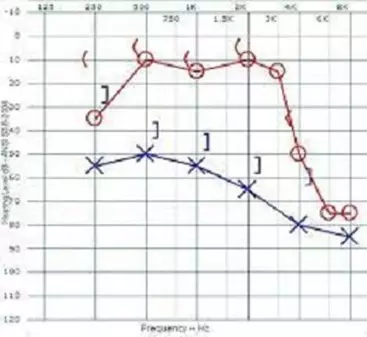
An example of a sensorineural hearing loss
Combined hearing loss
When the hearing loss has a dual sensory and transmission origin. In this type of hearing loss, different parts of the ear (external, middle and internal) and auditory nerves may be damaged.
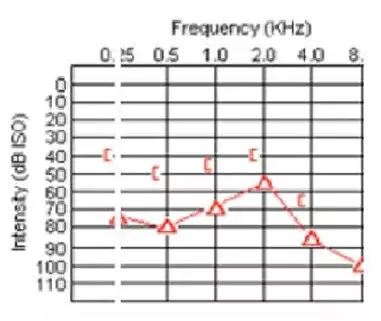
Central Deafness
In this type of hearing damage, the hearing threshold of the affected person is in the normal range, but the processing of complex speech signals is not done properly, and therefore the patient will not understand well. The following are the most important reasons for Central Curry:
- Damage to Wernicke’s area in the brain
- Central auditory processing disorder
- old age
- Diseases involving the central nervous system such as Alzheimer’s, cerebral dementia, etc.
Tinnitus
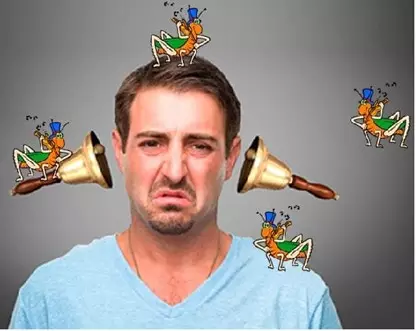
The sensation of ringing in the ear is called tinnitus. This common condition usually affects about 15 to 20 percent of the population. Tinnitus is not a disease, but a symptom of an underlying disease such as hearing loss due to old age, ear damage or circulatory system disorder, and it can be annoying and in some cases (such as the presence of a tumor) is a sign of a serious condition. Although tinnitus worsens with age, many people can improve it with treatment. Sometimes treating the underlying disease is effective in eliminating tinnitus. Other methods of eliminating tinnitus reduce or eliminate the sound so that the person will notice the tinnitus less.
Symptoms of tinnitus
In this situation, when there is no external sound, the person feels that he is hearing a sound. Symptoms of tinnitus include hearing these types of false sounds in the ears:
1) Bell 2) Vibration 3) Roar 4) Click 5) Flash 6) Whisper

The degree of loudness of tinnitus varies from a quiet roar to a very loud sensation, and a person may hear the sound in one or both ears. In some cases, the sensation of tinnitus is so loud that it interferes with the ability to concentrate or hear outside sounds. Tinnitus may be constant or it may recur and subside.
There are two types of tinnitus:
Subjective tinnitus:
a tinnitus that only the person hears and is the most common type of tinnitus. It may occur as a result of a problem in the outer, middle or inner ear. This condition also occurs if the auditory nerve or the part of the brain that interprets nerve signals as sound (the auditory pathway) has a problem.
Objective tinnitus:
In this case, the otolaryngologist can also hear the tinnitus. This rare type of tinnitus occurs due to vascular disorders, problems in the ossicles of the middle ear, or muscle contractions.
When should you see an ENT man or an Audiologist?
Make an appointment with an ear, throat and nose specialist in the following situations:
- If you have annoying tinnitus.
- After an upper respiratory tract infection, such as a cold, he experienced severe tinnitus and tinnitus that did not improve within a week.
- Tinnitus occurred suddenly or for no apparent reason.
- Along with tinnitus, you experience confusion or hearing loss.
Common causes of tinnitus
A number of diseases lead to tinnitus or its exacerbation. In many cases, the exact cause cannot be identified. Tinnitus occurs in many people for the following reasons:
Hearing loss due to aging:
Many people’s hearing becomes weak with age, usually from the age of 60. Hearing loss can lead to tinnitus. The medical term for this type of deafness is tinnitus.
Exposure to loud noises:
Loud noises such as the sound of heavy equipment, chainsaws, and firearms are among the most common causes of hearing loss. Portable music devices, such as MP3 players or iPods, can also cause hearing loss if they are used at high volume for long periods of time. If a person is exposed to loud noise for a short period of time, for example, attending a concert, he will suffer from tinnitus, but usually this condition will be resolved soon. Short or long-term exposure to loud noise can permanently reduce hearing and cause tinnitus.
Blockage of earwax:
earwax protects the ear canal by trapping dust and slowing the growth of bacteria. If a large amount of earwax accumulates, it becomes difficult to clean it naturally, as a result, the person’s hearing is impaired or the eardrum is damaged, which leads to tinnitus.
Ear bone changes:
drying of the middle ear bones (otosclerosis) affects hearing and leads to tinnitus. This condition, which occurs due to abnormal bone growth, is usually hereditary. Other causes of tinnitus include hearing impairment, chronic diseases, and damage to nerves or the auditory center of the brain.
Other causes of tinnitus
Some causes of tinnitus are less common. As following:
Meniere’s disease:
Tinnitus may be one of the early symptoms of Meniere’s disease, a type of middle ear disorder that occurs due to abnormal pressure of middle ear fluid.
TMJ disorder:
a disorder in the temporomandibular joint (the joint located on both sides of the head and opposite the ear, where the jaw meets the skull) can cause tinnitus.
Head or neck injury:
Head or neck trauma can affect the middle ear, auditory nerves, or auditory function of the brain. Usually, such injuries cause tinnitus in one ear.
Ear nerve tissue tumor:
This non-cancerous (benign) tumor is formed in the cranial nerve that extends from the brain to the middle ear and controls balance and hearing. Usually this condition, also called vestibular schwannoma, causes tinnitus in only one ear.
Eustachian tube disorder:
In this condition, the ear tube that connects the middle ear to the upper pharynx is always dilated so that the ear feels full. Sometimes weight loss, pregnancy and radiotherapy cause this disorder.
Muscle spasm in the middle ear:
sometimes the middle ear muscles contract, which leads to tinnitus, hearing loss, and a feeling of fullness in the ear. Sometimes this condition occurs without a specific reason, but some neurological diseases, including multiple sclerosis, can also cause it.
Vascular disorders related to tinnitus
In rare cases, tinnitus occurs due to vascular disorders. This type of tinnitus is called pulsatile tinnitus. Among its reasons, the following can be mentioned:
Atherosclerosis: With age and the formation of cholesterol and other deposits, the main vessels near the middle and inner ear lose their elasticity (the ability to contract and expand with each heartbeat). In this way, the blood flow moves with more pressure and the ear hears the pulsation more easily. This type of tinnitus is usually heard in both ears.
Head and neck tumor: A tumor that presses on blood vessels in the head or neck (vascular neoplasm) causes tinnitus and other symptoms.
High blood pressure: High blood pressure and factors that increase blood pressure, such as stress, alcohol, and caffeine, can contribute to tinnitus.
Irregular blood flow: narrowing or twisting of the neck vein (carotid artery) or jugular vein causes the blood flow to be disturbed and irregular, which leads to tinnitus.
Capillary malformation: An arteriovenous malformation (AVM), an abnormal connection between an artery and a vein, leads to tinnitus. This type of tinnitus is usually only heard in one ear.
Medicines that cause tinnitus
A number of medications can cause or worsen tinnitus. Usually, the higher the dose of medicine, the more severe the tinnitus. Often the voice disappears after stopping the medication. Among the drugs that cause or aggravate tinnitus, the following can be mentioned:
- Antibiotics include polymyxin B, erythromycin, vancomycin, and neomycin
- Anticancer drugs including methotrexate (Trexal) and cisplatin
- Laxatives such as bumetanide (Boomax), ethacrynic acid (Edcrin), or furosemide (Lasix)
- Canine is used to treat malaria or other diseases
- Some antidepressants that aggravate tinnitus
- Aspirin if taken in high doses (usually 12 or more per day)
In addition, some herbal supplements, nicotine and caffeine cause tinnitus.
Vertigo
 Vertigo is one of the common medical problems that in many cases has no specific cause. But when a person complains of this condition, doctors first guess the cause of severe vertigo due to a lesion in the inner ear. Vertigo is not a disease, but a symptom of various conditions that usually disturb the balance of the body. Most of the people who suffer from this disorder have reported feeling light in the head area and a large percentage of them have faced black eyes. In this case, you feel that the environment around you is rotating in a circle.
It must have happened to you that you suddenly lose your balance and feel that you or your surroundings are spinning. Vertigo occurs when you feel like you’re spinning, but you’re not. In most cases, this condition is associated with weakness and laxity of the body, which can be attributed to low blood sugar, extreme fatigue or dehydration. But some people experience head cycle disorder very severe or during sleep, which should be taken seriously.
Different types of Vertigo
This disorder usually has two main categories:
Peripheral: When the cause of severe vertigo is due to a problem in the inner ear, the rotational state occurs.
Central: This disorder occurs when there is a problem in the brain, especially the cerebellum, such as infection, brain tumor, traumatic brain injury or stroke.
It is good to know that vertigo will disappear on its own if it is not caused by a specific problem or underlying disease. But in some cases, failure to take timely action can cause irreparable damage.
Dizziness symptoms
This disorder is usually not considered a disease on its own, but a symptom of certain conditions in the body. In general, dizziness will be accompanied by the following symptoms:
- Nausea and vomiting
- The lack of balance
- Tinnitus
- Headache
- A feeling of fullness in the ear
- Uncontrollable eye movement along the horizon, or vertically or rotating (Nystagmus)
Cause of dizziness
Some specific conditions and syndromes can cause severe and sudden dizziness. They include the following:
Benign Paroxysmal Vertigo (BPPV)
The most common cause of sudden vertigo is benign positional vertigo or BPPV, which occurs when a person changes the position of their head. This type of head rotation is usually experienced when a person is lying down, sitting or turning suddenly in bed.
Meniere’s disease
Accumulation of fluid in the inner ear caused by Meniere’s disease is the cause of vertigo attacks. Usually, this disease will not be cured, but the doctor will teach the patient the necessary training to manage its symptoms. Symptoms of tinnitus (ringing in the ears), hearing loss and ear fullness are annoying symptoms of Meniere’s disease.
Labyrinthitis
The inner ear or labyrinth has a vestibular nerve that is responsible for transmitting information about sound, head movement and its position to the brain. If the inner ear becomes inflamed due to infection, it is called Labyrinthitis. Symptoms of this disease are headache, earache, tinnitus, vision changes and hearing loss.
Vestibular neuritis
Another cause of severe headache is vestibular neuro-inflammation. Vestibular neuritis is similar to labyrinthitis, except that it does not cause hearing loss. Sudden dizziness, blurred vision and nausea are the most common symptoms of vestibular neuritis.
Cholesteatoma
This disease is a non-cancerous growth of the skin in the middle ear that is caused by frequent ear infections. Cholesteatoma is associated with severe dizziness, balance disturbance and hearing loss.
Other effective factors in creating head circumference
- Migraine headaches
- Stroke
- Head injury
- Long rest in bed
- Ear surgery
- Ear infection
- Leakage of inner ear fluid into the middle ear
- Decreased blood pressure while standing
- Muscle weakness
- Otosclerosis or abnormal bone growth in the middle ear
- Multiple sclerosis
If you suddenly feel dizzy without a specific reason or situation, you should take it seriously.
What is the cause of dizziness in sleep?
If you wake up feeling dizzy, weak, and unsteady, it could indicate a specific illness or condition. Usually the cause of dizziness in sleep is caused by the following factors:
- Medicines: Some anti-depressants, blood pressure, allergy, anticonvulsants, sedatives and prostate medicines increase the possibility of headaches in sleep.
- Dehydration: not drinking enough fluids is one of the main causes of dizziness in sleep. Dehydration will cause the brain and body to not function properly, which results in headaches. Be sure to drink water a few hours before going to bed.
- Heart failure: This problem means not pumping blood properly to different parts of the body. As a result, a drop in blood pressure occurs and the body cannot tolerate it, which appears in a serious way, especially when sleeping and getting up from bed.
- Hypoglycemia: A drop in blood sugar causes various hormonal and chemical changes in the body, which should be considered as the cause of dizziness during sleep, especially in the early morning.
Persistent dizziness when waking up can indicate a disease or a specific condition in the body.
Vertigo diagnosis method
A neurologist or an otolaryngologist will first take a history from you during a physical examination about your period symptoms. They may also need other tests to confirm their diagnosis. You can see its test types in the following:
Head thrust test: While you are focused on a fixed target, the doctor moves your head in any direction.
Romberg test: to evaluate balance, eyes closed, feet together and hands at the sides.
The Fukuda-Unterberg test: asks you to stand there for 30 seconds with your eyes closed to check your inner ear and balance.
Dix-Hallpike test: To check eye movement, the patient goes from a sitting position to a lying position by being placed on the examination bed.
Vestibular test battery: to evaluate inner ear problems with spectacles.
CT Scan and MRI: imaging tests to diagnose vertigo-related disease
Hearing loss in the family
The presence of hearing loss in more than one family member can be caused by the presence of a defective gene in the genetic structure of that family member. In such a situation, first, detailed examinations and history taking by a specialist doctor and then referring the patient to a genetics laboratory can be effective in diagnosing this type of hearing loss.
Delay in language and speech development
Many studies and researches have been conducted on the relationship between hearing and language and speech development, and all of them emphasize that any lesion in the auditory system (conductive or sensorineural hearing loss) can seriously affect the development of speech and language. One of the elders of auditory rehabilitation science says: We talk with our ears.
Therefore, it should be noted that examining speech development in the early years of life can identify the presence of hearing loss in children. An infant who does not make sounds (Babbling) should pay the attention of the parents to the fact that this child probably has a hearing loss.
Of course, it should be noted that examining speech organs and nerve pathways and the central nervous system and ensuring their health can be very useful in reaching a correct diagnosis.