
In health sciences, rehabilitation is a process in which a disabled person is helped to regain his lost ability after an event, illness or injury that has led to his functional limitation. Rehabilitation is considered a very broad scientific field in the set of health and medical services and helps people recover after suffering from problems such as stroke, spinal cord injuries, orthopedic surgeries, concussions, burns, hearing loss, central auditory processing disorder, balance problems and Vision problems, etc., overcome their problems as much as possible and regain their previous functional independence.
The principles of rehabilitation are based on rehabilitating and restoring a person’s abilities to the state of maximum independence. In rehabilitation, unlike medicine, no drugs are prescribed and the process of recovering abilities is gradual. The philosophy of rehabilitation is to give hope and prepare a disabled person to live in society on the one hand, and prepare the society to accept him as a citizen on the other hand.
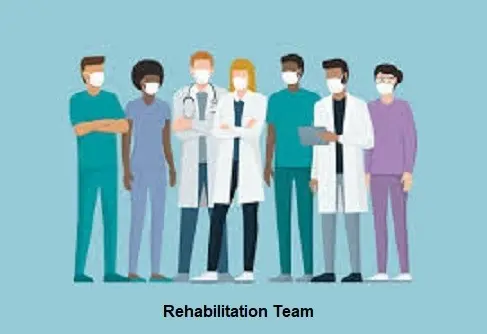
Branches of Rehabilitation
Considering that rehabilitation is mostly used for children and adults who have problems in terms of physical, mental or hearing and speech abilities, the fields involved in these processes are considered branches or members of the rehabilitation team. These fields are:
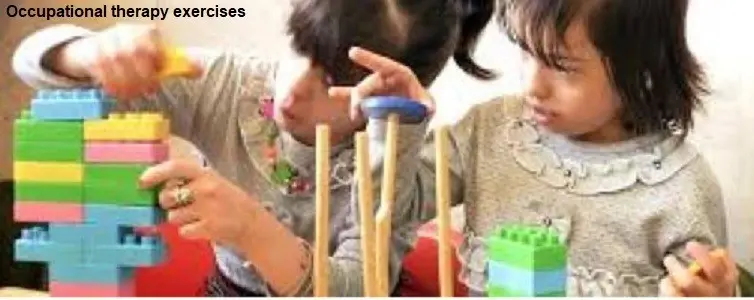
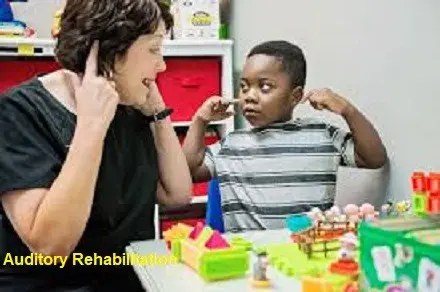
1) Audiology 2) Optometry 3) Technical orthopedics 4) Physical medicine and rehabilitation 5) Physiotherapy 6) Occupational therapy 7) Speech therapy 8) Social work
Rehabilitation goals
- Prevention of disability
- Prevent the development of disability
- Raising the level of public opinion towards disabled people
- Trying to make the disabled self-sufficient and enable him to deal with problems
- Matching the life of the disabled with the society
- Providing suitable urban facilities and services for the use of the disabled
- Increasing the awareness of disabled people regarding their physical and mental abilities and limitations and adapting and harmonizing their situation with the environment
Features of Rehabilitation
Rehabilitation has many features. These features include the following:
- Process centered: rehabilitation is generally a process with physical, psychological and social dimensions that dynamically leads the client to an active life.
- Restoring abilities: Rehabilitation is actually empowering the patient to regain what he lost due to disorder or injury.
- Effectiveness: Rehabilitation emphasizes on improving the effectiveness or achieving the maximum level of performance of the client.
- Reducing disability: Rehabilitation is able to work towards reducing disability and disabilities by relying on services such as preventing the occurrence of disorders and disabilities, removing physical barriers of the environment, equalizing opportunities, and social integration.
- Empowerment and facilitation: Rehabilitation is not a passive process! Rather, it enables the patient to try to meet the needs of his life by using the available power and resources.
- Client-centered: Rehabilitation creates an environment that enables the client to acquire the necessary skills and increase their independence.
- Problem solving: The rehabilitation process has the feature of being able to increase problem-solving skills and help the patient make effective decisions by improving knowledge and training.
- Being holistic: The concept of totality and comprehensiveness refers to a person’s complete health and well-being in the framework of harmony and coherence of mind, body, spirit and soul with the environment.
- Educational: rehabilitation is actually an educational process, and the patient under rehabilitation should actively try to create a learning environment, identify needs and determine rehabilitation goals, identify resources, and finally, evaluate rehabilitation programs.
- Consolidation and social integration: Rehabilitation tries so that all people, whether healthy or disabled, benefit from the same opportunities based on justice and equality.
- Gaining independence: one of the characteristics of rehabilitation is the client’s gaining independence, which means having the right to choose how to live based on individual capacity, values and desires.
- Quality of life: Rehabilitation is the process of improving the quality of life. Considering that a person’s goals and expectations are greatly influenced by his physical and psychological condition, the level of independence and social relations. As a result, rehabilitation in this field tries to improve the individual’s condition.